
Look
The money side of having children
I often think about what children cost. For many middle-aged parents, we must build big expenses, like schooling and universities, into our cash flow modelling to help them budget and plan. We are far less likely to think about the economics of not having children. In the UK, women aged 55 to 59 without children have almost twice as much retirement savings as women with children.
Some projections suggest that nearly one in three UK women could reach 45 without having had a child by the late 2060s; this group is becoming an increasingly important holder of wealth.
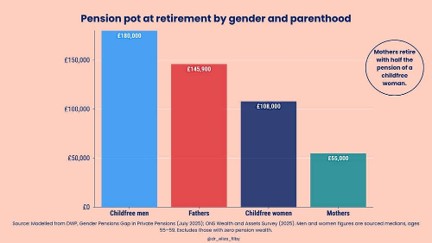
Source: Eliza Filby, It’s All Relative (modelled from DWP and ONS data)
But there is a catch! Studies show that caring for ageing parents often falls on women, and in particular childfree women. These women therefore need to plan for this, while also thinking carefully about who will care for them, who they trust if they lose capacity, and ultimately who inherits.
This illustrates how important personalised financial planning is. Everyone has a different financial plan, with different questions worth asking early.
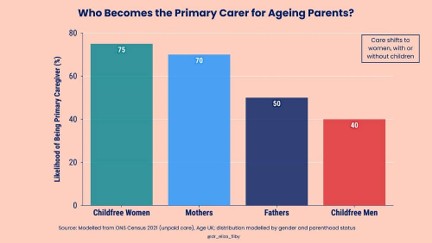
Source: Eliza Filby, It’s All Relative (modelled from ONS Census 2021 and Age UK data)
Listen
The magic of different minds
Close your eyes and picture an apple. Can you see it? Alex Rosenthal can’t. He has aphantasia, which means he can’t create mental pictures. Around 2–4% of people experience this, while at the other extreme some people see images almost as vividly as real life. Most of us are somewhere in between.
What I love about his story is that Alex works in animation, which is a career you might think requires a vivid visual imagination. He sees it differently.
His TED Talk explores what can happen when businesses deliberately bring together people whose brains work differently. We know diverse teams tend to make better decisions, but diversity of thought matters too. Sometimes the person who sees the world completely differently from you is exactly the person you need in the room.
Learn
The illusion of clarity
Anne-Laure Le Cunff, a neuroscientist at King’s College London and founder of Ness Labs, calls it the illusion of clarity: that confident feeling that we understand simply because it’s familiar. In one of her studies, people rated how well they understood everyday things like zips and sewing machines. When asked to explain exactly how they worked, their confidence dropped sharply.
Humans often mistake familiarity for understanding. We also confuse what we know with what we know we can look up! Researchers call this the Google Effect, and Le Cunff jokes it may now need to be renamed the ChatGPT Effect.
Financial planning is full of this. Retirement annuities, endowments, offshore investing and estate duty are all familiar concepts. We can Google them, ask a friend or increasingly ask AI, and it can quickly feel like we know enough to do it ourselves. Information has never been easier to find. But good advice is not simply about getting information.
It’s about understanding how tax, investments, retirement, estate planning, and family circumstances all interact. It’s about knowing which questions to ask, and often about seeing and highlighting the risks and opportunities you may not have seen.
Ponder
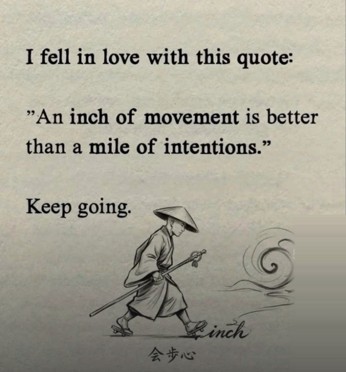
In this section, I invite you to think about a question I may pose or a thought I may share.
Oenophilia
“Oenophilia simply refers to enjoying wine, often by laymen.”
I recently had a delightful dinner at one of my favourite wine farms, Rust en Vrede, where the sommelier introduced me to a new Swartland pearler.
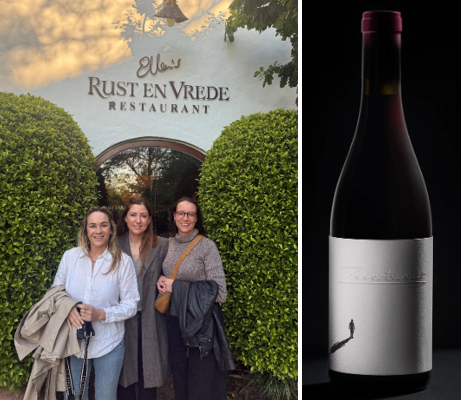
I had the Zwartwater Red Blend 2024 from Lammershoek Estate on the Paardeberg mountain. It’s a gorgeous blend of Syrah, Carignan and Mourvèdre, from vines ranging from old blocks planted in 1976 to younger ones planted in 2013, all rooted in the weathered granite soils of the Paardeberg.
I’m a massive Swartland fan, and this wine is no exception. Blackberry, dark spice and those slightly wild, savoury flavours the Swartland does so well.
I had it with pork, which was delicious, but it’s just as good on its own. Probably not widely available, but worth trying if you see it. And perhaps exactly what we need going into the last crazy few months of the year.
Stay curious,
Elke Zeki